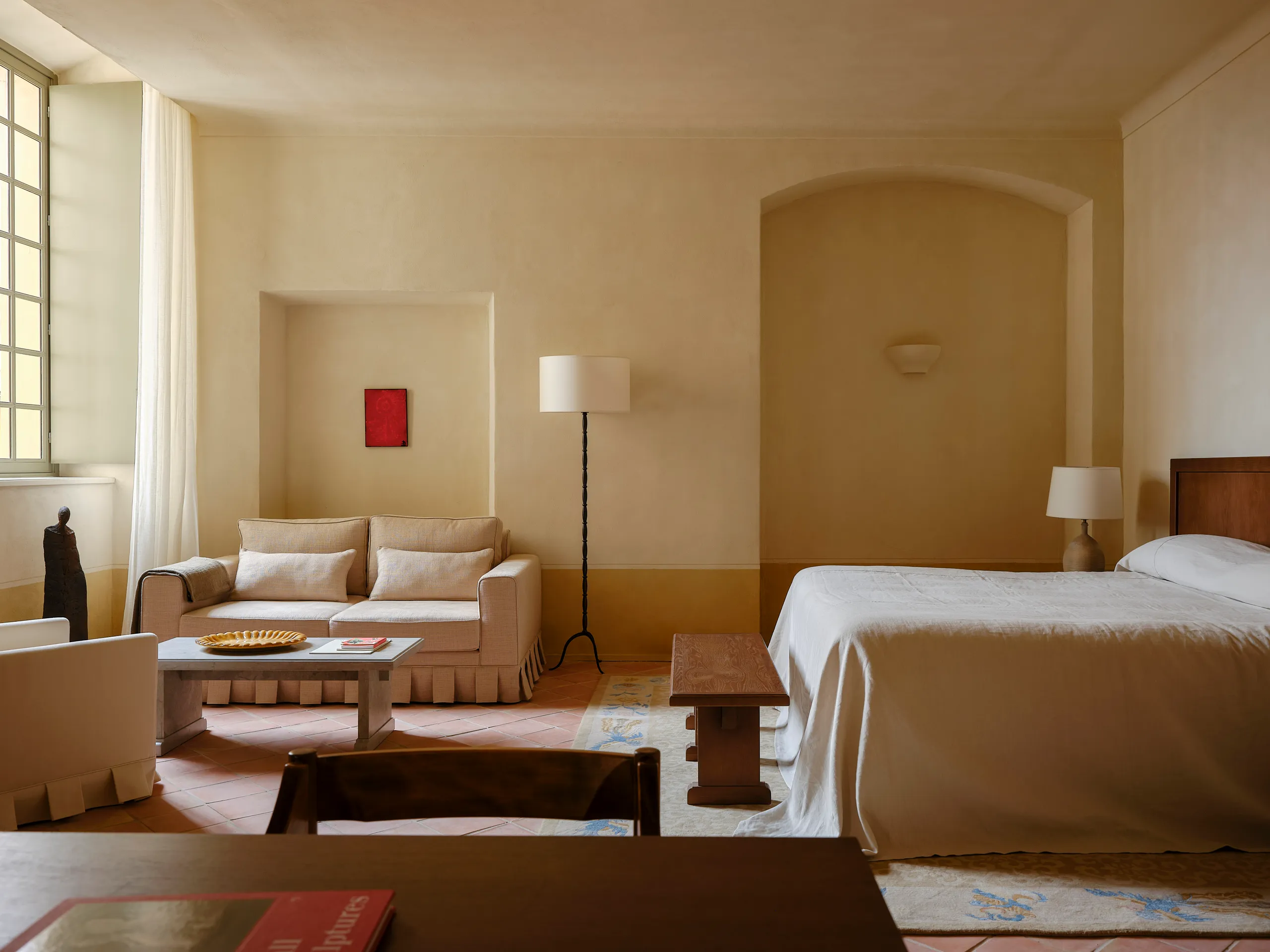
At its heart, the monastic aesthetic draws from the principles of monastic living—simplicity, utility, and spiritual serenity—without requiring any religious affiliation.
Designers describe it as pared-back luxury: honest materials, muted palettes, and spaces that prioritize reflection over showiness. Think thick oak tables, creamy linens, stone accents, and soft, diffused lighting that mimics candle glow.
It’s a reaction to years of overstimulation. After scrolling through endless feeds and navigating constant notifications, people crave homes that feel like sanctuaries. As one antique dealer who owns a former chapel put it, it’s “utilitarian rather than performative.”
The Origins: From Ancient Monasteries to Modern Homes
Monastic design isn’t new; it’s rooted in centuries-old religious architecture. Cloisters with arched walkways, thick stone walls for insulation and quiet, and sparse furnishings designed for contemplation shaped early examples.
In the 20th century, architects like Le Corbusier drew inspiration from monasteries for modernist purity—clean lines, white surfaces, and functional beauty. Fast-forward to today, restored convents turned hotels, like Hôtel du Couvent in Nice, blend historic elements with contemporary comfort: simple wooden beds, plaster reliefs, and stone arches that feel timeless yet inviting.
This evolution shows the aesthetic adapts. It’s not austere poverty; it’s intentional restraint that creates space for the mind.
Key Elements Defining Monastic Interiors in 2026
The look relies on natural, unfussy materials that age gracefully.
Wood dominates—sycamore, oak, or pine with thick, substantial tops that feel grounded and permanent. Limewashed walls add texture and softness, reflecting light gently. Stone floors or accents bring earthiness, while creamy linens and minimal textiles keep things tactile yet restrained.
Lighting plays a huge role. Candle sconces or warm, low-level fixtures create atmospheric glows, encouraging slower evenings.
Arches and curved forms appear in doorways or built-ins, softening the space without adding decoration.
Color Palette: Muted, Earthy, and Calming
Forget stark whites. 2026’s monastic spaces favor warm neutrals—soft beiges, pale grays, warm taupes, and subtle earth tones.
These colors promote tranquility and pair beautifully with natural materials. A limewashed wall in pale ochre feels alive compared to flat paint.
The palette echoes wabi-sabi influences, embracing subtle imperfections for authenticity.
Furniture Choices: Simple, Sturdy, and Soulful
Furniture stays low-profile and functional.
- Low wooden beds with crisp linens
- Benches or simple stools instead of ornate chairs
- Oversized tables that double as workspaces
- Built-in storage to eliminate visual clutter
Pieces feel handmade or heirloom-quality, with clean lines and no flashy hardware.
How Monastic Style Differs from Related Trends
Monastic aesthetic overlaps with others but stands apart.
Monastic vs. Japandi — Japandi mixes Japanese minimalism with Scandinavian coziness. Monastic leans more architectural and contemplative, often with stone and plaster over wood-heavy hygge.
Monastic vs. Warm Minimalism — Warm minimalism adds softness to classic minimalism. Monastic goes further with spiritual undertones, favoring meditative emptiness.
Monastic vs. Wabi-Sabi — Wabi-sabi celebrates imperfection. Monastic incorporates that but prioritizes serene order over visible flaws.
Pros and Cons of Adopting the Monastic Aesthetic
Pros
- Promotes mental clarity and reduced stress
- Easier to maintain with less clutter
- Timeless appeal that doesn’t date quickly
- Enhances natural light and material beauty
- Supports sustainable choices with durable, local materials
Cons
- Can feel too sparse if not balanced with warmth
- Requires discipline to avoid filling empty spaces
- Initial investment in quality pieces
- Might seem cold without proper lighting/textures
- Not ideal for families needing toy storage or vibrant play areas
Real-Life Examples Bringing Monastic Vibes Home
Hôtel du Couvent exemplifies modern monastic: stone arches, simple beds, and plaster details create luxury through restraint.
Closer to home, designers reference Edwin Lutyens’ Castle Drogo kitchen—rustic wood and utilitarian design that feels monastic yet practical.
In urban apartments, people limewash walls, add a thick oak bench, and limit decor to a few meaningful objects, transforming chaotic city living.
I tried it myself last year—cleared half my shelves, added a wooden stool and beeswax candles. The room felt bigger, quieter. Small changes, big impact.
How to Incorporate Monastic Elements Without a Full Overhaul
Start small for big results.
- Limewash one accent wall for texture
- Swap harsh overhead lights for sconces or table lamps
- Choose solid wood furniture over particleboard
- Declutter ruthlessly—keep only what serves or sparks joy
- Add natural textiles like linen throws
These tweaks build serenity gradually.
Where to Source Monastic-Inspired Pieces
Look for artisans and vintage dealers.
- Society Antiques for rustic wood and antiques
- Rowen & Wren for minimalist, soulful pieces
- Local craftsmen for custom benches or tables
- Online marketplaces like Vinterior for lived-in finds
Prioritize quality over quantity—better one good piece than ten mediocre ones.
People Also Ask (PAA)
What is monastic interior design? It’s a serene, minimalist style inspired by monastic living, focusing on simplicity, natural materials, and calm through restraint—no religious commitment required.
Is monastic style the same as minimalism? Not quite. Minimalism can feel stark; monastic adds warmth, texture, and a contemplative depth, often with architectural elements like arches.
How do I make my bedroom feel monastic? Opt for a low wooden bed, neutral linens, limewashed walls, and soft lighting. Keep surfaces clear and add one meaningful item, like a candle or simple vase.
Can monastic aesthetic work in small spaces? Absolutely—its emphasis on uncluttered space makes tiny homes feel expansive and peaceful.
What’s the difference between monastic and luxe-monastic? Luxe-monastic adds high-end touches like premium fabrics or subtle gold accents while keeping the core simplicity.
FAQ
Why is monastic aesthetic trending in 2026? After years of digital overload and flashy trends, people seek homes that restore calm and focus. It’s an antidote to chaos, aligning with wellness and slow living.
Does it have to be expensive? No—focus on natural materials and decluttering. Thrift vintage wood pieces or DIY limewash for budget-friendly results.
How to avoid making it feel too cold? Layer textures (linen, wool), use warm wood tones, and incorporate soft lighting. Add personal touches sparingly for soul.
Is it family-friendly? It can be, with smart storage and durable materials. Emphasize communal areas for connection while keeping private spaces serene.
Will this trend last beyond 2026? Its roots in timeless principles suggest staying power, evolving rather than disappearing like fads.
Embracing the monastic aesthetic in 2026 isn’t about rules—it’s about creating space to breathe. In a noisy world, that feels almost sacred. If you’ve been feeling overwhelmed, maybe start with one wall or one candle. You might find the peace you’ve been searching for right at home.